Showing posts with label Judicial Branch. Show all posts

Tuesday, December 17, 2019

Checks on the Judicial Branch

Announcements:
The snow days have obviously impacted our ability to get through everything that we need to before final exams the rest of the week. It also limits the time you have for any attempts at retakes. Here is how we are planning to proceed:

  • Review the posts from the last couple of days on checks on the judicial and judicial philosophy.
  • We will take the first 30-45 minutes or so of class to review the material on the judicial branch.
  • Since we will not have the full time for administering the exam, we will NOT complete the FRQ as part of our final exam. The final (Unit 2 Exam) will consist of 35 questions over the branches of government, AP-format (stimulus-based and traditional m/c) and will be worth 70 points.
  • You should review by looking at past posts--specifically the essential questions and learning standards. Looking over your identification terms, utilizing Khan Academy, and watching some of the other review videos should also help.
  • For those of you needing to retake or make up a missing quiz or test--I will NOT be available Wednesday before school. However, you may come in Wednesday after school, Thursday before or after school, and Friday before school. 
  • Please email me if you have any questions.


Finals Schedule:

Executive Branch Quiz Retakes: If you are not satisfied with your performance on the quiz over the executive branch, you may opt to take a retake of that quiz. Please  complete at least six of the twenty-eight assigned Khan Academy modules before the retake.

READING: 441-477 in Edwards


UNIT TWO IDENTIFICATION TERMS
_______________________________________________
Today's Essential Question: How can the other branches limit the judicial branch?

Learning Standards:
CON-5.C: Explain how other branches in the government can limit the Supreme Court’s power.
CON-5.B.3: Controversial or unpopular Supreme Court decisions can lead to challenges of the Court’s legitimacy and power which Congress and the president can address only through future appointments, legislation changing the Court’s jurisdiction, or refusing to implement decisions.
CON-5.C.1: Restrictions on the Supreme Court are represented by:

  • Congressional legislation to modify the impact of prior Supreme Court decisions 
  • Constitutional amendments 
  • Judicial appointments and confirmations 
  • The president and states evading or ignoring Supreme Court decisions 
  • Legislation impacting court jurisdiction


The courts' main weapon to limit the power of the other branches is judicial review. But what about the limits on the courts? What can the executive and legislative branches do to check the courts?


The Appointment and Confirmation Battle Over Neil Gorsuch


7 Things to Know About Supreme Court Nominations


What does the chart below tell us about confirmation politics? Why is this occurring?


Review Videos


 The Politics of Confirming the President's Judicial Nominees


JudicialNominations.org: website detailing the nomination process, includes statistics on the number of vacancies

Monday, December 16, 2019

Judicial Philosophy: Judicial Activism vs. Judicial Restraint

Announcements:


Finals Schedule:


Executive Branch Quiz Retakes: If you are not satisfied with your performance on the quiz over the executive branch, you may opt to take a retake of that quiz. Please complete at least six of the twenty-eight assigned Khan Academy modules before the retake.

READING: 441-477 in Edwards


UNIT TWO IDENTIFICATION TERMS
_______________________________________________
Today's Essential Question: How do judges interpret the Constitution differently (judicial activism vs. judicial restraint)?

Learning Standards:
CON-5.B.4: Political discussion about the Supreme Court’s power is illustrated by the ongoing debate over judicial activism versus judicial restraint.

Judicial Philosophy
Should judges interpret the Constitution according to the original intent of the framers, or apply evolving contemporary values to their rulings?

What determines how a judge or justice will vote? Do judges and justices have certain philosophies in interpreting the law and making rulings? Many people criticize the Court and its tendency to not only just interpret the law, but to make the law (policy) through its decisions.


1. Read the following article discussing the debate over original intent and a "living" Constitution.
Original Intent or Evolving Constitution? Two Competing Views on Interpretation.

2. Discuss in your group the following questions from the article:


In addition to "original intent" vs. "living constitution" judges will also sometimes practice either judicial activism or judicial restraint in their decision making. 

3. Look at the chart below comparing judicial philosophies and find a Supreme Court case that represents judicial activism and one that represents judicial restraint.

Judicial Philosophies


4. Read the following articles about judicial philosophy and watch the video on Stephen Breyer on activist judges.


Review Videos:


A really good video by Justice Breyer on judicial activism vs. restraint:


Justice Breyer and Justice Scalia debate judicial philosophy:


Friday, December 13, 2019

How the Supreme Court Works

Announcements:


Executive Branch Quiz Retakes: If you are not satisfied with your performance on the quiz over the executive branch, you may opt to take a retake of that quiz. Please complete at least six of the twenty-eight assigned Khan Academy modules before the retake.

READING: 441-477 in Edwards


UNIT TWO IDENTIFICATION TERMS
_______________________________________________
Today's Essential Question: How do cases reach the Supreme Court and how are judicial decisions made?

Learning Standards:
CON-5.B.1: Precedents and stare decisis play an important role in judicial decision making.


How the Supreme Court Works
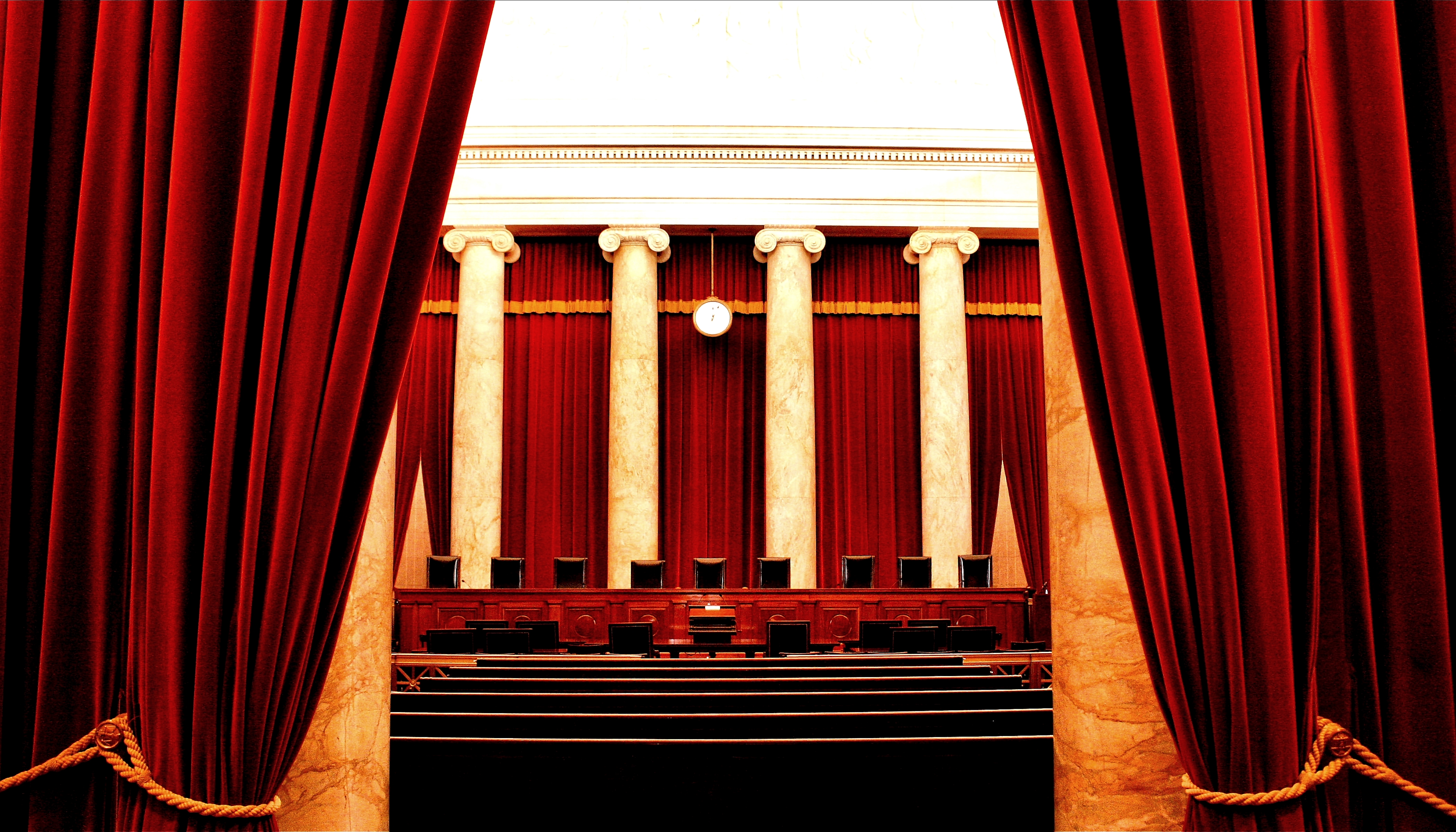
What happens at the Supreme Court? Today we are going to take a look behind the curtain and see how SCOTUS operates.


Here are a few key questions:

  • How does a case reach the Supreme Court?
  • What happens once a case is accepted?
  • What are oral arguments like?
  • What are the different types of opinions that the Court issues?


These are just a few of the questions we are going to try and answer today as we look at how the Supreme Court works.

Key Terms: writ of certiorari, Rule of Four, briefs, amicus curiae brief, majority opinion, dissenting opinion, concurring opinion, law clerks, precedent, stare decisis

First, take 5-10 minutes and read how the Supreme Court operates.

Next, let's look at a real case, Riley v. California. The Court granted cert in January of 2014.  It involves warrantless searches of cell phones and the possible violation of Fourth Amendment rights. ScotusBlog and Oyez both have quite a few resources on the case.

Here's an example of a brief and a couple of amicus curiae briefs (ACLU and Arizona, et al). The oral arguments illustrate the back and forth between Justices and attorneys.

Here is the official opinion of the Court in Riley v. California.

The court system in the United States is predicated on the principle of stare decisis, or following past precedents. Why is stare decisis so important for our legal system?

Precedent & Stare Decisis


Wednesday, December 11, 2019

Federalist 78 & Brutus XV

Announcements:

Girls State: Any girls interested in attending Girls State this summer, please email Ms. Eikel (lauren.eikel@lps53.org) to attend an informational meeting this Thursday @9:00am

Executive Branch Quiz Retakes: If you are not satisfied with your performance on the quiz over the executive branch, you may opt to take a retake of that quiz. Please complete at least six of the twenty-three assigned Khan Academy modules before the retake.

READING: 441-477 in Edwards


UNIT TWO IDENTIFICATION TERMS
_______________________________________________
Today's Essential Question: How do Brutus XV and Federalist 78 illustrate the differences of opinions regarding the power of the national government, specifically the judicial branch?

Learning Standards:
CON-5.A: Explain the principle of judicial review and how it checks the power of other institutions and state governments.
CON-5.A.1: The foundation for powers of the judicial branch and how its independence checks the power of other institutions and state governments are set forth in:
  • Article III of the Constitution 
  • Federalist No. 78 
  • Marbury v. Madison (1803)

The debate over what the judicial branch should look like stretches back to the early days of the republic. Today, we are going to be looking at an Anti-Federalist view of the newly proposed constitution and its judicial powers, as well as Hamilton's defense of the judiciary in Federalist 78.

Debate Questions:
1)Be it resolved that Supreme Court Justices shall serve for terms of seven years but can be reappointed for an unlimited number of terms.

2) Be it resolved that all federal judges shall be elected by a general vote of the people for limited terms of office


Discussion Questions (read the above essays with these questions in mind):
  1. According to Brutus, how does the Supreme Court of the United States differ from the highest court in England?
  2. What is Brutus's attitude toward the Supreme Court of the United States? Find specific statements to support your opinion.
  3. The Constitution helped to ensure judicial independence, in part, by having judges be appointed instead of elected, and by giving them a life term. Using Federalist #78, explain Hamilton’s arguments for appointment of judges and life terms. Why did he think that these things made the judiciary more independent? Why was this independence so important according to Hamilton? 
  4. In the course of making his arguments in Federalist #78, Hamilton notes that “. . . the judiciary is beyond comparison the weakest of the three departments of power. . .” and that as such it can “never attack with success either of the other two.” After reading Federalist #78,  explain the reasons that Hamilton gave in support of his claims above. You should also consider whether this statement rings true today, given changes in society (access to information, the media, etc.).
  5. How does Hamilton defend the use of judicial review?  If the judiciary can override laws passed by the legislature, then the judicial branch must be above the legislative branch—What does Hamilton say about this?


There is growing concern over the life tenure of federal judges, including several proposals to limit judges to set terms. The articles and videos below explore some of the criticisms and proposed reforms.

Revising the Constitution: We Need Term Limits for Federal Judges

Running the Numbers on Supreme Court Term Limits


Should the Constitution be amended to limit judicial terms? Why or why not?


Here's a HipHughes video to help you understand Federalist 78 and the independence of the judiciary.

Monday, December 9, 2019

Marbury v. Madison & Judicial Review

Announcements:

Executive Branch Quiz: Tuesday (tomorrow)
Review Sheet for Executive Branch quiz

Homework: Read Brutus XV and Federalist 78 for Wednesday. Annotate or take notes over both readings and be prepared to debate the points raised in each of the essays

Junior Girls: Do you love government? Want to gain leadership skills? Missouri Girls State may be just for you. If you want to learn more about this 8 day summer experience, there will be an informational meeting on Thursday, Dec. 12th @ 9:00 AM. Please contact Mrs. Eikel if you'd like to attend the meeting. 

READING: 441-477 in Edwards


UNIT TWO IDENTIFICATION TERMS
_______________________________________________
Today's Essential Question: How is the principle of judicial review used to check the power of the other branches?

Learning Standards:
CON-5.A: Explain the principle of judicial review and how it checks the power of other institutions and state governments.
CON-5.A.1: The foundation for powers of the judicial branch and how its independence checks the power of other institutions and state governments are set forth in:
  • Article III of the Constitution 
  • Federalist No. 78 
  • Marbury v. Madison (1803)
_______________________________________________

Judicial Review

Where in the Constitution does it grant the federal courts, and specifically the Supreme Court, the power of judicial review?


Here is the text of Article III (The Judicial Branch):

Section 1- Judicial powers. Tenure. Compensation.

The judicial power of the United States, shall be vested in one supreme court, and in such inferior courts as the Congress may, from time to time, ordain and establish. The judges, both of the supreme and inferior courts, shall hold their offices during good behaviour, and shall, at stated times, receive for their services a compensation, which shall not be diminished during their continuance in office.

Section 2 - Judicial power; to what cases it extends. Original jurisdiction of Supreme Court Appellate. Trial by Jury, etc. Trial, where

1. The judicial power shall extend to all cases, in law and equity, arising under this constitution, the laws of the United States, and treaties made, or which shall be made under their authority; to all cases affecting ambassadors, other public ministers and consuls; to all cases of admiralty and maritime jurisdiction; to controversies to which the United States shall be a party; to controversies between two or more states, between a state and Citizens of another state, between Citizens of different states, between Citizens of the same state, claiming lands under grants of different states, and between a state, or the Citizens thereof, and foreign states, Citizens or subjects. (This section modified by Amendment XI)
2. In all cases affecting ambassadors, other public ministers and consuls, and those in which a state shall be a party, the supreme court shall have original jurisdiction. In all the other cases before-mentioned, the supreme court shall have appellate jurisdiction, both as to law and fact, with such exceptions, and under such regulations as the Congress shall make.
3. The trial of all crimes, except in cases of impeachment, shall be by jury; and such trial shall be held in the state where the said crimes shall have been committed; but when not committed within any state, the trial shall be at such place or places as the Congress may by law have directed.

Section 3 - Treason defined. Proof of. Punishment of.

1. Treason against the United States shall consist only in levying war against them, or in adhering to their enemies, giving them aid and comfort. No person shall be convicted of treason unless on the testimony of two witnesses to the same overt act, or on confession in open court.
2. The Congress shall have power to declare the punishment of treason, but no attainder of treason shall work corruption of blood, or forfeiture, except during the life of the person attainted.


One of the most important (if not the most important) Supreme Court cases is Marbury v. Madison. This video will help explain the root problems addressed in Marbury and more importantly, the Court's decision and its consequences. Please fill out this TEMPLATE and keep with your other important SCOTUS decisions.


Questions to Consider:
1. In the Court's opinion, is Marbury entitled to his appointment? If the Supreme Court of the United States had issued the writ of mandamus, how could it have forced Madison and Jefferson to comply with the order? What would have happened if they had ignored it? (In other words, does the Court have enforcement power?)
   
2.   In this case, Chief Justice John Marshall and the Court "gave up some power in order to get more." Explain. What power did they give up? What power did they gain? Why did the Court do this?

3.   Why does the judicial branch, as opposed to the executive or legislative branch, have the power of judicial review?  Should the other branches have a say?

4. Is judicial review a good idea? Should nine unelected judges be able to tell our elected representatives what they can and cannot do? Why or why not? Does the Marbury decision mean that legislators or members of the executive branch have no responsibility to judge the constitutionality of their own actions?


5. Are judges, protected with lifetime tenure and drawn generally from the educated class, more likely to be reflective and above the passing enthusiasms that drive legislative action? How political is the Court?

6. Could we have a workable system of government without judicial review? How does judicial review help check tyranny by the majority?


Additional Resources:


Here are a few more videos to help you understand the significance of Marbury v. Madison/judicial review:


Marbury v. Madison=JUDICIAL REVIEW!

This should become as instinctive and reflexive as answering your name. Guaranteed to be on the AP exam.