Showing posts with label Supreme Court. Show all posts

Tuesday, December 17, 2019

Checks on the Judicial Branch

Announcements:
The snow days have obviously impacted our ability to get through everything that we need to before final exams the rest of the week. It also limits the time you have for any attempts at retakes. Here is how we are planning to proceed:

  • Review the posts from the last couple of days on checks on the judicial and judicial philosophy.
  • We will take the first 30-45 minutes or so of class to review the material on the judicial branch.
  • Since we will not have the full time for administering the exam, we will NOT complete the FRQ as part of our final exam. The final (Unit 2 Exam) will consist of 35 questions over the branches of government, AP-format (stimulus-based and traditional m/c) and will be worth 70 points.
  • You should review by looking at past posts--specifically the essential questions and learning standards. Looking over your identification terms, utilizing Khan Academy, and watching some of the other review videos should also help.
  • For those of you needing to retake or make up a missing quiz or test--I will NOT be available Wednesday before school. However, you may come in Wednesday after school, Thursday before or after school, and Friday before school. 
  • Please email me if you have any questions.


Finals Schedule:

Executive Branch Quiz Retakes: If you are not satisfied with your performance on the quiz over the executive branch, you may opt to take a retake of that quiz. Please  complete at least six of the twenty-eight assigned Khan Academy modules before the retake.

READING: 441-477 in Edwards


UNIT TWO IDENTIFICATION TERMS
_______________________________________________
Today's Essential Question: How can the other branches limit the judicial branch?

Learning Standards:
CON-5.C: Explain how other branches in the government can limit the Supreme Court’s power.
CON-5.B.3: Controversial or unpopular Supreme Court decisions can lead to challenges of the Court’s legitimacy and power which Congress and the president can address only through future appointments, legislation changing the Court’s jurisdiction, or refusing to implement decisions.
CON-5.C.1: Restrictions on the Supreme Court are represented by:

  • Congressional legislation to modify the impact of prior Supreme Court decisions 
  • Constitutional amendments 
  • Judicial appointments and confirmations 
  • The president and states evading or ignoring Supreme Court decisions 
  • Legislation impacting court jurisdiction


The courts' main weapon to limit the power of the other branches is judicial review. But what about the limits on the courts? What can the executive and legislative branches do to check the courts?


The Appointment and Confirmation Battle Over Neil Gorsuch


7 Things to Know About Supreme Court Nominations


What does the chart below tell us about confirmation politics? Why is this occurring?


Review Videos


 The Politics of Confirming the President's Judicial Nominees


JudicialNominations.org: website detailing the nomination process, includes statistics on the number of vacancies

Friday, December 13, 2019

How the Supreme Court Works

Announcements:


Executive Branch Quiz Retakes: If you are not satisfied with your performance on the quiz over the executive branch, you may opt to take a retake of that quiz. Please complete at least six of the twenty-eight assigned Khan Academy modules before the retake.

READING: 441-477 in Edwards


UNIT TWO IDENTIFICATION TERMS
_______________________________________________
Today's Essential Question: How do cases reach the Supreme Court and how are judicial decisions made?

Learning Standards:
CON-5.B.1: Precedents and stare decisis play an important role in judicial decision making.


How the Supreme Court Works
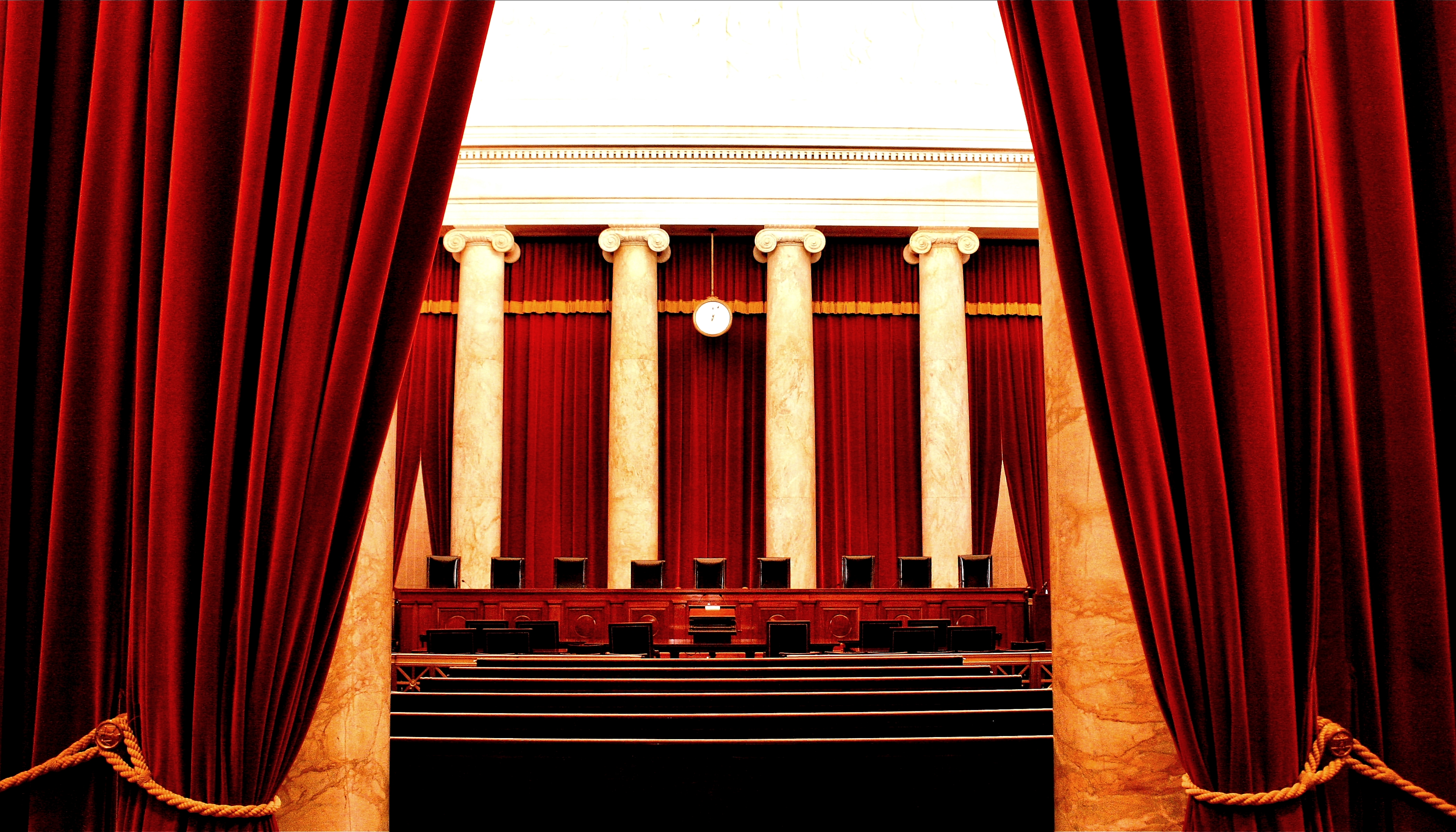
What happens at the Supreme Court? Today we are going to take a look behind the curtain and see how SCOTUS operates.


Here are a few key questions:

  • How does a case reach the Supreme Court?
  • What happens once a case is accepted?
  • What are oral arguments like?
  • What are the different types of opinions that the Court issues?


These are just a few of the questions we are going to try and answer today as we look at how the Supreme Court works.

Key Terms: writ of certiorari, Rule of Four, briefs, amicus curiae brief, majority opinion, dissenting opinion, concurring opinion, law clerks, precedent, stare decisis

First, take 5-10 minutes and read how the Supreme Court operates.

Next, let's look at a real case, Riley v. California. The Court granted cert in January of 2014.  It involves warrantless searches of cell phones and the possible violation of Fourth Amendment rights. ScotusBlog and Oyez both have quite a few resources on the case.

Here's an example of a brief and a couple of amicus curiae briefs (ACLU and Arizona, et al). The oral arguments illustrate the back and forth between Justices and attorneys.

Here is the official opinion of the Court in Riley v. California.

The court system in the United States is predicated on the principle of stare decisis, or following past precedents. Why is stare decisis so important for our legal system?

Precedent & Stare Decisis


Thursday, December 12, 2019

The Appointment Process & Its Effect on the Courts

Announcements:

Executive Branch Quiz Retakes: If you are not satisfied with your performance on the quiz over the executive branch, you may opt to take a retake of that quiz. Please complete at least six of the twenty-three assigned Khan Academy modules before the retake.

READING: 441-477 in Edwards


UNIT TWO IDENTIFICATION TERMS
_______________________________________________
Today's Essential Question: How does the appointment process and the Supreme Court's ideological make-up affect its decisions?

Learning Standards:
CON-5.B: Explain how the exercise of judicial review in conjunction with life tenure can lead to debate about the legitimacy of the Supreme Court’s power.
CON-5.B.2: Ideological changes in the composition of the Supreme Court due to presidential appointments have led to the Court’s establishing new or rejecting existing precedents.


The Appointment Process & Impact of Ideology on Court Decisions


Let's first take a look at the nomination process: The Path to Kavanaugh's Confirmation


How Brett Kavanaugh Will Change the Supreme Court

Now let's examine some charts on the presidential appointments and justice ideology. For each chart, come up with at least one observation. What is the main takeaway? What questions do you have? 

Supreme Court Nominees Senate Confirmation Votes


Review Videos